Skip Navigation

Choosing the right marina berth for your motor cruiser: 7 things to check before committing

7 minutes read
27 Nov, 2026
Boating Beginner
By Freddie

Choosing the right marina berth for your motor cruiser: 7 things to check before committing

Choosing a marina berth for your motor cruiser involves more than finding an available space at the right price. You need to consider your boat's length, beam and draught, access to cruising routes, security, shore power, maintenance facilities and the full cost of your mooring agreement. A berth that looks convenient on paper may become frustrating if access is restricted, manoeuvring is difficult or essential services are unavailable. Whether you're buying your first motor cruiser or moving an existing boat to a different marina, taking time to assess these factors can help you avoid unexpected expenses and make boat ownership more enjoyable.

1. Check that the berth suits your motor cruiser's dimensions

Your motor cruiser needs sufficient space for safe manoeuvring, mooring and boarding. Before choosing a marina berth, confirm that the available space accommodates your boat's overall length, beam and draught, including any fixed platforms or protruding equipment. You should also consider whether the surrounding pontoons and fairways provide enough clearance to manoeuvre comfortably. Boat dimensions can be surprisingly easy to underestimate, particularly when you're moving from a smaller cruiser to a larger vessel. For example, a motor cruiser advertised as 10 metres long may have additional equipment extending beyond the hull. A bathing platform or other fittings could affect the space required. When discussing berth availability, make sure you understand how the marina measures your vessel. Important Measurements To Check:
  • Length Overall (LOA): The Boat's Total Length, Including Relevant Fixed Projections.
  • Beam: The Maximum Width Of Your Motor Cruiser.
  • Draught: The Depth Of Water Required Beneath The Hull.
  • Air Draught: The Height Of Your Boat Above The Waterline, Particularly Important For Bridges.
  • Manoeuvring Space: The Available Clearance Around The Berth And Within The Marina Fairways.
You should also consider how easily you can bring your boat alongside in different weather conditions. A berth that feels straightforward during a calm afternoon might be considerably more difficult to approach in a strong crosswind. If possible, inspect the proposed berth from the water before making your decision.

2. Consider the marina's location and access to cruising routes

The right marina location depends on where you intend to use your boat, how frequently you plan to visit and which waterways you want to explore. A marina close to home may seem ideal, but its surrounding cruising area is equally important. If you regularly want to spend weekends exploring rivers, coastal destinations or inland waterways, make sure the location supports those plans. For motor cruiser owners in Lincolnshire, Burton Waters Marina provides access to the Fossdyke Navigation, with connections towards Lincoln and the River Trent. Meanwhile, boaters based around Ipswich and Woodbridge may have different priorities, particularly where tidal navigation is involved.

Understand tidal restrictions and navigation access

Some marinas offer access to cruising waters throughout the day, while others have restrictions because of tides, lock operations or water levels. Before committing, establish:
  • Tidal Restrictions: Whether Entry And Exit Depend On Tide Times.
  • Lock Access: Whether Operating Hours Or Booking Requirements Affect Your Journeys.
  • Bridge Clearances: Whether Your Boat's Air Draught Limits Available Routes.
  • Water Depth: Whether Your Cruiser Can Navigate Safely At Different Water Levels.
  • Seasonal Restrictions: Whether Maintenance Closures Or Adverse Conditions Could Affect Cruising.
You should also think about how often you'll realistically use your boat. If you mostly enjoy short weekend trips, convenient access to nearby cruising destinations may matter more than having an extensive range of facilities.

3. Compare the full cost of marina berthing

Marina berthing fees vary depending on location, vessel size, berth type and available services. Many UK marinas calculate annual charges using boat length, although minimum-length charges and other pricing arrangements may apply. The advertised mooring fee is therefore only part of the overall cost. When comparing marina berths, ask for a complete breakdown of recurring and occasional charges.
Cost consideration What you should check
Annual mooring fee Price per metre, minimum charges and payment terms
Electricity Metered usage, connection costs and applicable standing charges
Water Whether freshwater access is included
Parking Availability and any additional charges
Lifting and storage Charges for lifting, hardstanding and winter storage
Maintenance Availability and pricing of servicing and repairs
Contract terms Notice periods, renewal conditions and cancellation charges
For example, a marina charging £300 per metre annually would cost £3,000 for a 10-metre boat before additional charges, assuming there is no different minimum charge or pricing arrangement. However, a slightly more expensive berth could offer better value if it provides convenient maintenance facilities, secure access and services you would otherwise need to arrange elsewhere. If you're considering purchasing a cruiser, remember to include berthing costs in your wider ownership budget. For buyers comparing purchase options, exploring available boat finance arrangements alongside ongoing operating costs can help establish a more realistic budget.

4. Assess marina security and pontoon accessibility

Security should be an important consideration when choosing a marina berth, especially if your motor cruiser will remain unattended for extended periods. Look for controlled pontoon access, suitable lighting, security monitoring and clear procedures for dealing with incidents. You should also assess how safely you can reach and board your boat. Check the condition of pontoon surfaces, access ramps, cleats and mooring points. Consider whether access remains practical during wet or icy weather. At Burton Waters Marina in Lincoln, facilities include gated pontoons and 24-hour security. However, security alone shouldn't determine your choice. A well-managed marina should also provide clear information about emergency procedures, access arrangements and responsibilities for berth holders. Before signing, ask whether your insurer has any specific requirements concerning marina security or mooring arrangements.

5. Check shore power, water and essential facilities

Reliable marina facilities can make a significant difference to everyday boat ownership, particularly if you regularly spend weekends aboard. Shore power can support battery charging and onboard electrical systems, while freshwater access makes routine cleaning and preparation more convenient. Before committing, confirm whether electricity is available at your allocated berth, whether the supply is suitable for your boat and how consumption is charged. You should also consider other facilities that may be important to you. These could include toilets, showers, laundry facilities, fuel supplies, pump-out services, waste disposal and nearby shops.

Don't overlook onboard safety

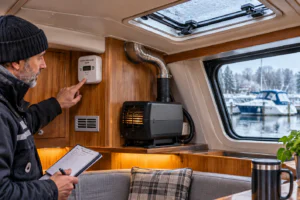
Convenient facilities should never replace proper onboard safety precautions. If your motor cruiser has fuel-burning appliances or an engine capable of producing carbon monoxide, appropriate detection and ventilation are essential. The Boat Safety Scheme provides guidance on placing carbon monoxide alarms aboard boats, including suitable locations and positioning. When inspecting a marina, also establish where emergency equipment is located and how staff can be contacted outside normal office hours.

6. Look at servicing, repairs and winter maintenance

Access to reliable maintenance facilities can save considerable time and inconvenience throughout your boat's ownership. Motor cruisers require regular attention to their engines, electrical systems, hulls and other equipment. Depending on your boat and cruising environment, you may also need antifouling, anode replacement, winterisation and periodic lifting. Before choosing a marina, find out whether maintenance services are available on site or nearby. For example, if your engine requires attention shortly before a planned trip, having access to a nearby marine engineering team could be considerably easier than arranging repairs at a distant boatyard. Burton Waters provides boat servicing and repairs, including marine engineering and boatyard services. It's also worth asking about arrangements for external contractors. Some marinas restrict who can undertake work on site or require permission before repairs begin. Understanding these conditions beforehand can prevent complications when maintenance is needed.

7. Read the mooring agreement before signing

A marina berth agreement sets out your rights, responsibilities and the conditions under which you can keep your boat at the marina. Before signing, check the agreement carefully rather than assuming that arrangements will be similar to your previous marina. Pay particular attention to the contract duration, payment requirements, notice periods and circumstances in which the marina can change your allocated berth. You should also clarify what happens if you sell your boat. For example, if you're planning to upgrade through a boat brokerage service, you should establish whether your current mooring agreement can be transferred, terminated or adjusted. Similarly, if you're considering a replacement vessel, check whether the marina can accommodate its dimensions before making a commitment. Owners who want to release funds from an existing vessel may also wish to explore a cash offer for their boat before arranging a new purchase. Remember that a berth associated with a boat being advertised for sale is not necessarily transferable to the buyer. Always obtain written confirmation of berth availability and the applicable terms.

How to compare 2 marina berths before making your decision

When choosing between 2 suitable marinas, try to compare how each would work for your normal boating routine rather than focusing exclusively on the annual fee. Imagine you've found 2 marinas with similar prices. The first is closer to home but has restricted tidal access. The second requires a longer drive but offers easier access to your preferred cruising routes. Neither is automatically the better choice. If you regularly take spontaneous afternoon trips, unrestricted access might be particularly valuable. If you use your motor cruiser mainly for longer planned holidays, the shorter journey from home could be more important. Visiting both marinas and discussing your intended use with their teams will help you make an informed decision.

Frequently asked questions about choosing a marina berth

How much does a marina berth cost in the UK?

UK marina berthing costs depend on the location, boat length, available facilities and type of mooring. Some marinas charge annually per metre, while others use different pricing structures or minimum-length requirements. Always request an individual quotation and establish whether electricity, parking, maintenance access and other services involve additional charges.

Is it better to keep a motor cruiser in freshwater or saltwater?

Freshwater and saltwater berthing each have advantages. Freshwater can reduce certain salt-related corrosion concerns, while coastal berths may provide more convenient access to sea cruising. However, freshwater does not eliminate corrosion, fouling or maintenance requirements. The best choice depends on your boat's construction, equipment, intended use and preferred cruising area.

Can you move your motor cruiser between marinas?

Yes, provided your boat is suitable for the route and the destination marina can accommodate it. You should confirm berth availability, navigation restrictions, insurance requirements and any notice period associated with your current agreement. For longer journeys or unfamiliar waterways, professional advice or boat delivery assistance may be appropriate.

Should you arrange a marina berth before buying a motor cruiser?

Ideally, you should investigate suitable marina berths before completing your purchase. This allows you to confirm that your chosen boat can be accommodated and understand the ongoing costs. If you're comparing new boats for sale, checking berth availability early can also help you decide which vessel size best suits your intended cruising area.

Find the right marina berth with Burton Waters

Choosing a marina berth is an important part of motor cruiser ownership. The right location should accommodate your boat safely, provide convenient access to your preferred waterways and offer the facilities you need without unexpected costs. At Burton Waters, we support boat owners with marina facilities, boat sales and marine services across our Lincolnshire and Suffolk locations. Whether you're looking for a suitable mooring, considering your first motor cruiser or planning an upgrade, our team can help you explore the available options. Contact Burton Waters to discuss marina berthing and your boating requirements. Lincoln: 01522 567404 Ipswich: 01473 225710 Woodbridge: 01394 385577

Leave a Comment:

Your email address will not be published. Required fields are marked *

Popular posts

27 Mar, 2024
By Freddie
News & Advice

Unlock exclusive brokerage deals for selling your boat hassle-free with Burton Waters. Benefit from free storage, deferred transport costs, low-rate fees, captivating drone footage, walkthrough videos, and extensive social media coverage. Sell your boat seamlessly today

02 Aug, 2023
By Freddie
News & Advice

Luxury isn’t just about having the biggest swankiest boat in the marina. Luxury is about ensuring all your needs are met and exceeded on board. Whether that is a cozy interior for romantic evenings, hydraulic bathing platforms for comfort and convenience, or upgraded navigation systems for long boating trips.